Fly Fishing: A Moving Meditation with Cari Ray
Admission:
Event: $10.00 | Members & Children: Free
Event & Dinner*: $41.95
*Extend your time with us and enjoy a meal in our historic, lakeside Dining Hall. Click below to register for this event and see the option to buy a ticket “with Meal.” Advance registration is required to add a meal as space is limited and subject to availability.
“Ask any fly fisher why they like to fish, and one of the first things you are likely to hear is that time and troubles all but disappear when you’re on the water. After experiencing this phenomenon for years, I began to lean into aspects of the sport that contributed to its meditative quality and, it turns out, the same practices that lead to relaxation and calm also make you a better fly angler. “ - Cari Ray
In a world obsessed with shortcuts to performance, fly fishing beckons us to slow down and take the scenic route. In this presentation, Cari will share some of the decisions you can make, on and off the water, to simultaneously enhance your enjoyment and increase your fly angling success.
Enhance your experience by joining us for a delicious dinner in our Historic Dining Hall overlooking Lake Sagamore, followed by the presentation.
Cari Ray - Fly Fishing Guide & FFI-Certified Casting Instructor
Cari Ray, now Sagamore’s Sr. Director of Programs & Operations, is a former full-time guide, host of the Fisher of Zen Podcast, and founder of Zen Fly Fishing, a woman-owned and operated fly fishing school and guide service. She brings years of teaching and guiding in Texas, Colorado, New Mexico, and the Adirondacks. She has always been committed to helping her clients and students become more independent and successful fly anglers. Her true passion, however, is in inviting them to leverage the sport of fly fishing as a sort of “moving meditation.” She believes that some of the most valuable “catches” found on the water have little to do with fish.
All Event Sessions
Listening to Birds: Turning Observation into Science with Wil Hershberger
Admission:
Event: $10.00 | Members & Children: Free
Event & Dinner*: $41.95
*Extend your time with us and enjoy a meal in our historic, lakeside Dining Hall. Click below to register for this event and see the option to buy a ticket “with Meal.” Advance registration is required to add a meal as space is limited and subject to availability.
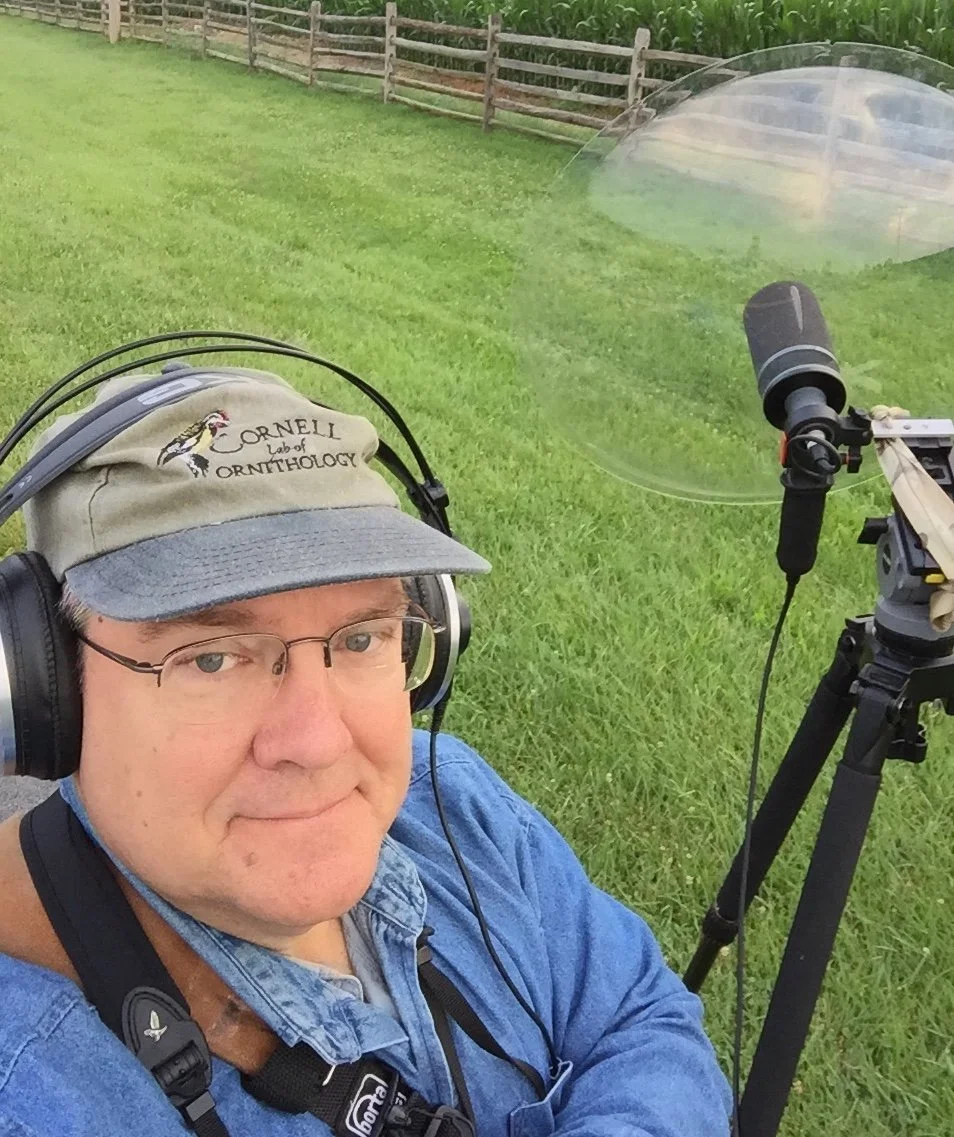
Birdsong is more than music, it’s data. In this presentation, Wil Hershberger introduces the tools and techniques that turn birdwatching into meaningful scientific contribution. Learn how to use the Cornell Lab of Ornithology’s eBird app to track your observations, how those records are used in bird research and conservation efforts, and how participants can upload photos and audio recordings to the Macaulay Library. The program will also include a brief overview of recording bird sounds, giving attendees practical ways to listen more closely and participate in citizen science.
Wil Hershberger
Has been an avid naturalist most of his life. After becoming an accomplished and well-respected birder, he rekindled the photography skills he had first learned in his dad’s basement darkroom. Today his photography has become an extension of his passion for the natural world. Wil is also an accomplished nature sounds recordist with over 6,000 recordings, including birds and bugs, archived at the Cornell Laboratory of Ornithology’s Macaulay Library. Through his photography and sound recordings, he hopes to instill in others the desire to protect and save these sacred natural treasures.
Fly Fishing: A Moving Meditation with Cari Ray
Admission:
Event: $10.00 | Members & Children: Free
Event & Dinner*: $41.95
*Extend your time with us and enjoy a meal in our historic, lakeside Dining Hall. Click below to register for this event and see the option to buy a ticket “with Meal.” Advance registration is required to add a meal as space is limited and subject to availability.
“Ask any fly fisher why they like to fish, and one of the first things you are likely to hear is that time and troubles all but disappear when you’re on the water. After experiencing this phenomenon for years, I began to lean into aspects of the sport that contributed to its meditative quality and, it turns out, the same practices that lead to relaxation and calm also make you a better fly angler. “ - Cari Ray
In a world obsessed with shortcuts to performance, fly fishing beckons us to slow down and take the scenic route. In this presentation, Cari will share some of the decisions you can make, on and off the water, to simultaneously enhance your enjoyment and increase your fly angling success.
Enhance your experience by joining us for a delicious dinner in our Historic Dining Hall overlooking Lake Sagamore, followed by the presentation.
Cari Ray - Fly Fishing Guide & FFI-Certified Casting Instructor
Cari Ray, now Sagamore’s Sr. Director of Programs & Operations, is a former full-time guide, host of the Fisher of Zen Podcast, and founder of Zen Fly Fishing, a woman-owned and operated fly fishing school and guide service. She brings years of teaching and guiding in Texas, Colorado, New Mexico, and the Adirondacks. She has always been committed to helping her clients and students become more independent and successful fly anglers. Her true passion, however, is in inviting them to leverage the sport of fly fishing as a sort of “moving meditation.” She believes that some of the most valuable “catches” found on the water have little to do with fish.
All Event Sessions
Creative Drawing Past & Present with Wes Sherman
Admission:
Event: $10.00 | Members & Children: Free
Event & Dinner*: $41.95
*Extend your time with us and enjoy a meal in our historic, lakeside Dining Hall. Click below to register for this event and see the option to buy a ticket “with Meal.” Advance registration is required to add a meal as space is limited and subject to availability.
The Sagamore Seminars education series is offered by Sagamore Institute of the Adirondacks, a 501 (c)(3) nonprofit organization chartered by the Board of Regents of the Education Department of the State of New York and sole owner and operator of Great Camp Sagamore.
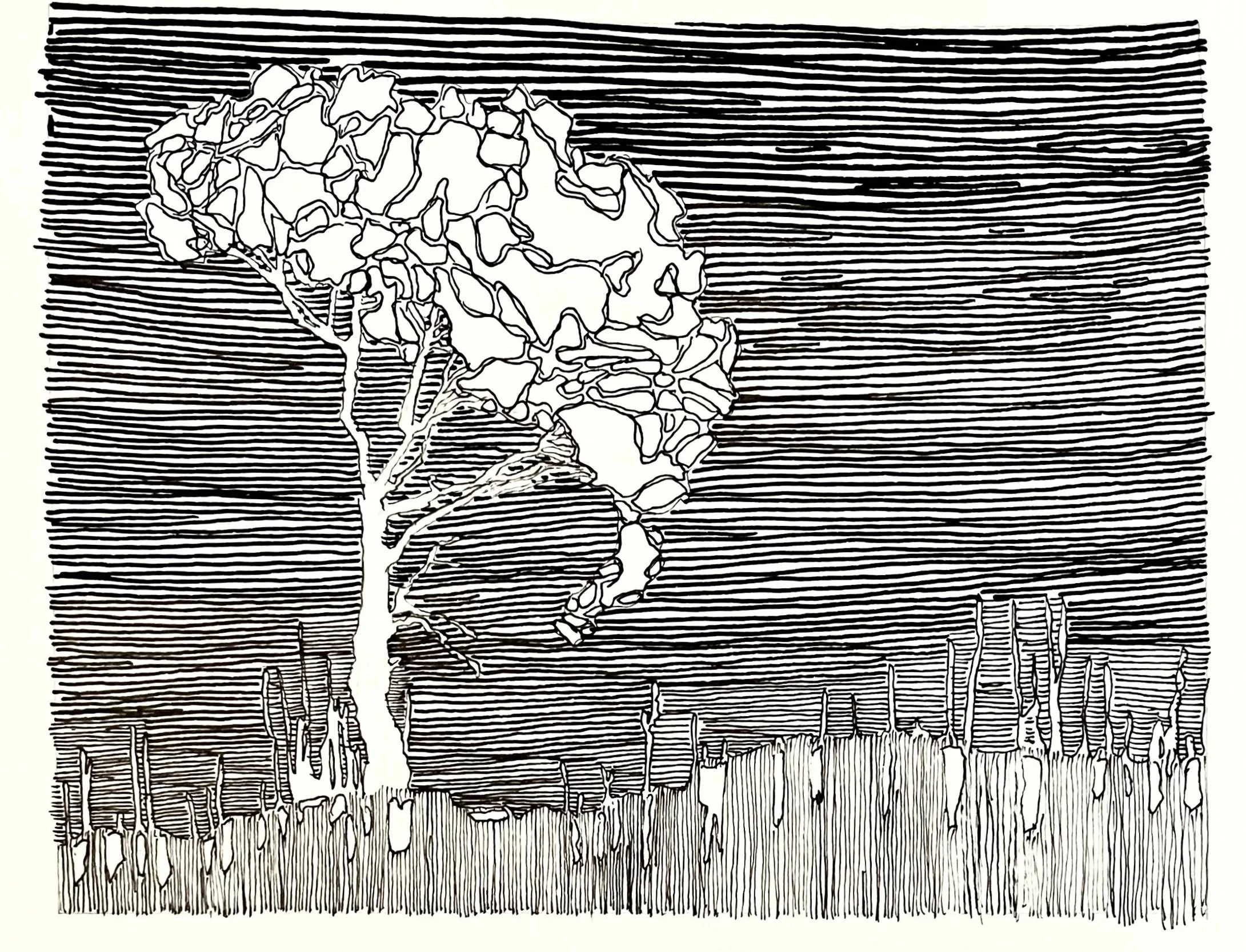
Humankind's earliest recorded histories can be found in the marks etched onto cave walls tens of thousands of years ago. When words fall short, we turn to images, using visual expression to communicate what language cannot. Join art professor Wes Sherman for an engaging presentation that delves into the significance of mark-making throughout human history, while also introducing the fundamental principles of composition.
Wes Sherman - Art Professor
Wes Sherman has been an artist for over 30 years. In that time, he has had 50 solo exhibitions and has been in hundreds of group exhibitions. He was Curator and Chair of Exhibitions at the Center for Contemporary Art in Bedminster, NJ for 12 years, where he had dedicated many volunteer hours to showcasing New Jersey art and artists. He has been a frequent visiting artist at universities and schools and is regularly asked to lead art programs for organizations and clubs. An adjunct professor, Sherman teaches at William Paterson University and Raritan Valley Community College. He received his MFA at Rutgers University, where he studied with his mentor Tom Nozkowski.
All Event Sessions
Born From Nature, and Built at Sagamore: The Adirondack Artistry of George Wilson
Admission:
Event: $10.00 | Members & Children: Free
Event & Dinner*: $41.95
*Extend your time with us and enjoy a viewing of the limited-time George Wilson Rustic Furniture Exhibit between 5:00pm-6:00pm, followed by a meal in our historic, lakeside Dining Hall. Click below to register for this event and see the option to buy a ticket “with Meal.” Advance registration is required to add a meal as space is limited and subject to availability.
The Great Camps had great furniture. It came from nature, was built by necessity, and remains exceptional to this day.
Between the 1880s and the 1920s, “Great Camps” like Sagamore transformed the Adirondack wilderness. Unsurpassed in their acreage and ambition, these massive complexes attracted Vanderbilts, Carnegies, Morgans, Rockefellers, Whitneys, Webbs and hosts of other, only-slightly-less-wealthy Gilded Age millionaires and their descendants.
Fleeing congested cities of steel, smoke, and sickness, each summer they sought refuge in these mountains from the ill-effects of the industrial society that had made their fortunes. These bark-clad buildings provided the perfect retreat: rustic on the outside and surrounded by rugged wilderness, yet surprisingly comfortable, ordered and refined on the inside. “Roughing it,” in practice, was seldom that.
But how to refine the interiors? What items might make these sitting-rooms, studies, dining halls, hunting lodges, and bedrooms mirror their exteriors in simplistic, natural style, but still match the complexity, rarity and luxury their owners expected?
The answer to those questions came from men like George Wilson. During the 1900s and 1910s, Wilson worked at Sagamore as a gardener, nursing the crops of vegetables and flowers through the harsh extremes of the Adirondack seasons. But off the clock, he worked on his art—ornately ordered twig-work and tree root tables, bookcases and writing desks that were highly sought in his day and have become practically priceless in our present.
Due the generous loan of a private collector and in celebration of the 50th anniversary of the Sagamore Institute of the Adirondacks, almost a dozen will spend the summer on display at the site that created them, more than a hundred years ago--Great Camp Sagamore.
Join Sagamore's Staff for an exclusive viewing of the pieces, and conversation that explores the context, craftsmanship, manufacture, and meaning of these exceptional artifacts that were born from nature, and built at Sagamore.
Connor Williams - Sagamore Historian
Connor Williams is a 19th Century Historian, trained at Middlebury College (B.A), Dartmouth College (M.A.), and Yale University (Ph.D, soon forthcoming).
A native New Yorker and aspiring maritime mountaineer, Connor currently lives with his family along Lake Champlain in the Adirondack Park. He serves as the Historian for Great Camp Sagamore, where he directs all history programming for several thousand visitors each summer. Most broadly, and via a variety of formats, Connor uses this role to conceive and execute innovative ways to teach environmental history, Gilded Age history, and the history of class, capitalism and inequality to diverse public history audiences.
His quest to summit the 46 ADK High Peaks ...continues.
All Event Sessions
“What Really Happened on July 4?” with Connor Williams
Admission:
Event: $10.00 | Members & Children: Free
Exhibit, Event, & Dinner*: $41.95
*Extend your time with us and enjoy a viewing of the limited-time George Wilson Rustic Furniture Exhibit between 5:00pm-6:00pm, followed by a meal in our historic, lakeside Dining Hall. Click below to register for this event and see the option to buy a ticket “with Meal.” Advance registration is required to add a meal as space is limited and subject to availability.
The Sagamore Seminars education series is offered by Sagamore Institute of the Adirondacks, a 501 (c)(3) nonprofit organization chartered by the Board of Regents of the Education Department of the State of New York and sole owner and operator of Great Camp Sagamore.
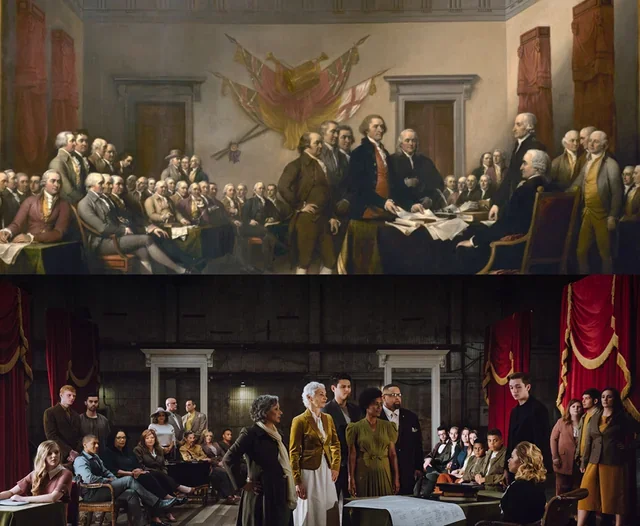
250 years ago, representatives from 13 colonies met in Philadelphia and declared their independence. Paradoxically, this was rather after the fact – they had already raised an army, committed treason against the crown, and fought pitched battles for about a year. And many students of the enlightenment will know that while the precise order of the words was unique, the Declaration of Independence’s preamble was hardly new – principal author Thomas Jefferson and editors John Adams, Benjamin Franklin, Phillip Livingston, and Roger Sherman were expressing sentiments that had already existed for decades.
There are other paradoxes as well. All 13 colonies possessed legal slavery, but all fought for a cause that claimed all men were created equal. While they fought against taxation without representation, their government forced those realities on the large majority of Americans afterwards (even white men), who were unable to vote. And while during the Civil War Abraham Lincoln could celebrate the “mystic chords of memory stretching from every patriot grave”, an honest accounting of the past requires us to reckon with the fact that the Revolution was itself a civil war, and we have more or less written the loyalists out of our history.
Still, something revolutionary DID happen in Philadelphia, and has happened ever since. Sagamore‘s Historian Connor Williams will discuss all these ideas and reflect on the importance of the American Revolution in our day, in its day, and ever since.
Connor Williams - Sagamore Historian
In addition to being Sagamore’s staff historian, Connor Williams is a formally trained American historian with degrees from Middlebury College, Dartmouth College, and Yale University. His past professional experience involves writing, speaking, teaching, consulting, and working for the United States Congress. In all these pursuits, he has enjoyed being able to keep one foot in the traditions and standards of formal academia, and one foot in the exigencies and politics of the present. The Sagamore Seminars in History provide a terrific chance to share his varied experiences and expertise with terrific participants in an exceptional, historical, and rejuvenating setting.
W.W. Durant & How the Great Camps Arose
Photo of Chalet at Camp Huntington (formerly Pine Knot) on Raquette Lake
Admission:
Event: $10.00 | Members & Children: Free
Exhibit, Event, & Dinner*: $41.95
*Extend your time with us and enjoy a viewing of the limited-time George Wilson Rustic Furniture Exhibit between 5:00pm-6:00pm, followed by a meal in our historic, lakeside Dining Hall. Click below to register for this event and see the option to buy a ticket “with Meal.” Advance registration is required to add a meal as space is limited and subject to availability.
In 1850, the Adirondack region was a blank spot on the map, largely unorganized and uncharted. But, by 1900, the Adirondacks hosted elaborate summer estates for the wealthiest families in America: Vanderbilts, Rockefellers, Carnegies, Whitneys and Morgans. While certainly not as lavish as their Newport cottages, Adirondack “Great Camps” such as Great Camp Sagamore still had elegant meals, fully stocked bars and dozens of staff to keep them running. The Adirondacks were a destination for escaping the city and recharging in nature, despite the dusty two-day journey. What was the genesis and what circumstances served as catalyst for this phenomenon?
This presentation by Sagamore’s historian, Dr. Connor Williams, will address these questions, and explore how environmentalism, opulence, industry, inequality, architecture and nature all intersected to produce the Adirondack Park (and the Adirondack vacations) we still connect to today.
Connor Williams - Sagamore Historian
Connor Williams, Great Camp Sagamore’s Historian, has formally trained at institutions throughout the Northeast, including a B.A. in History from Middlebury College, an M.A. in Globalization Studies from Dartmouth College, and a soon-forthcoming Ph.D in History and African American Studies from Yale University. As a public historian, he is pleased to have had many years of teaching and public history experience, including service to the United States Congress.
And as fate would have it (and fittingly appropriate for the Durant's Great Camps program), Connor is also 1/16th Durant; this makes him first cousins, five times removed, with Adirondack Great Camp founder and leading architect William West Durant. On a broad scale and across the board, Connor loves sharing the ever-evolving histories of the Adirondack Great Camps to an ever-expanding group of visitors, members, patrons, and friends.
All Event Sessions
The Gift of Darkness with Astronomer Aileen O’Donoghue
Admission:
Event: $10.00 | Members & Children: Free
Event & Dinner*: $41.95
*Extend your time with us and enjoy a meal in our historic, lakeside Dining Hall. Click below to register for this event and see the option to buy a ticket “with Meal.” Advance registration is required to add a meal as space is limited and subject to availability.
The Sagamore Seminars education series is offered by Sagamore Institute of the Adirondacks, a 501 (c)(3) nonprofit organization chartered by the Board of Regents of the Education Department of the State of New York and sole owner and operator of Great Camp Sagamore.
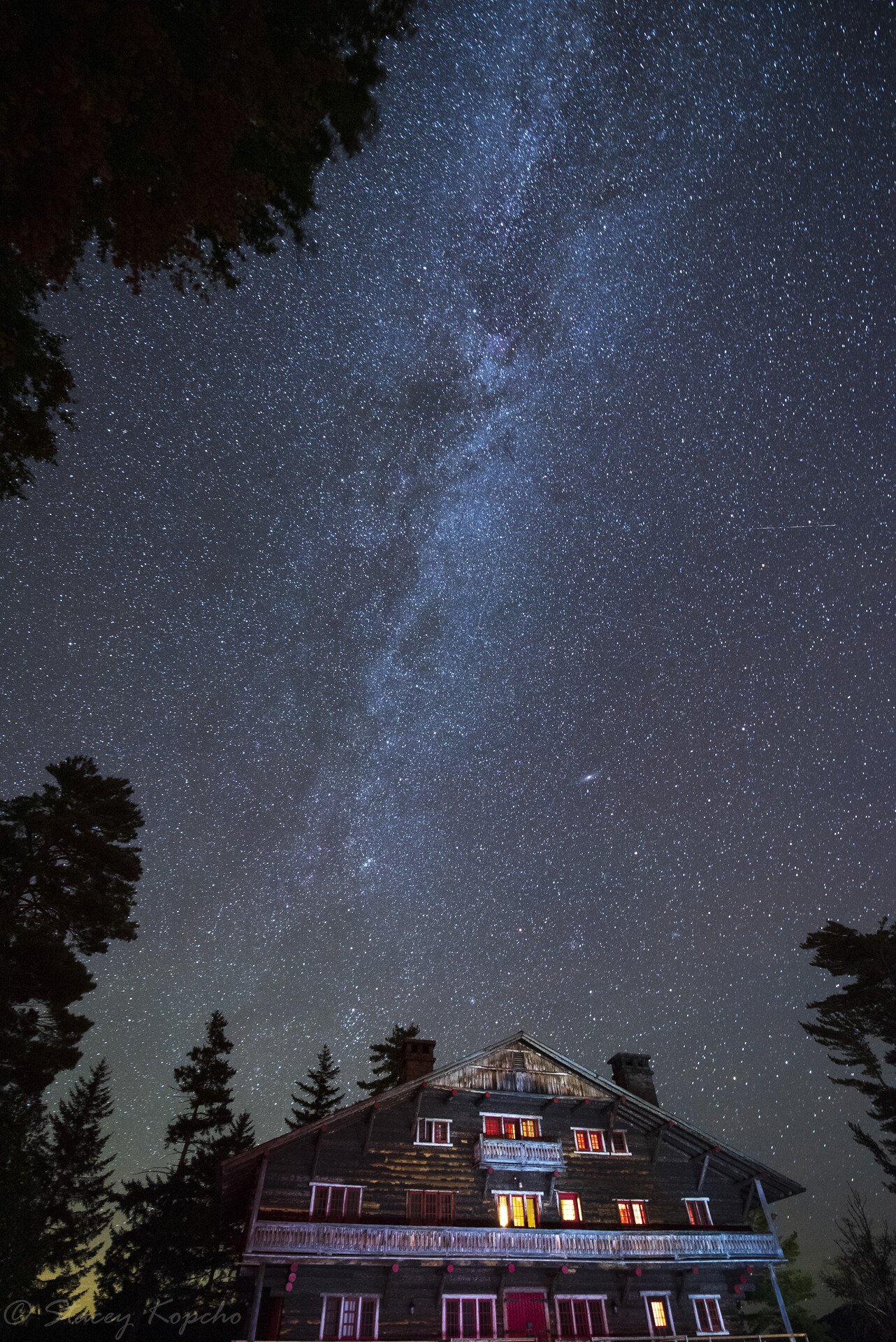
Astronomer Aileen O'Donoghue invites us to reconsider what darkness truly is—and why it matters. Tracing its origins in cosmic history, she explores the idea that darkness is not simply the absence of light, but a presence with its own meaning and power. From the formation of the universe to the rhythms that govern life on Earth, this thought-provoking program examines how we experience darkness and why both humans and the natural world depend on cycles of light and dark. Drawing connections between astronomy and monastic traditions, O’Donoghue reflects on how seekers of scientific discovery and spiritual insight alike enter darkness in pursuit of understanding—revealing that sometimes it is the light itself that hides what only darkness can illuminate. Join us for the presentation and stargazing!
Aileen O’Donoghue - Astronomer
Aileen A. O’Donoghue is the Henry Priest Professor of Physics at St. Lawrence University. She received an Associate of Arts degree at Colorado Mountain College that propelled her to earning her B.S. at Fort Lewis College and her M.S. and Ph.D. in Physics at the New Mexico Institute of Mining and Technology. Her research is primarily in radio astronomy and she has conducted observations with the Very Large Array, Arecibo and Green Bank radio telescopes. She has also observed dwarf galaxies in the visible band at the Vatican Advanced Technology Telescope and the optical spectra of stars using the 90” Bok telescope at Kitt Peak and the 1.5 m telescope at Cerro Tololo, Chile. She is currently a member of the ALFALFA undergraduate team studying galaxies in the Pisces-Perseus Superlcuster using radio, optical, and IR observations. Aileen is also a NASA Solar System Ambassador and a board member of the Adirondack Sky Center and Observatory in Tupper Lake, NY.
All Event Sessions
Creative Drawing Past & Present with Wes Sherman
Admission:
Event: $10.00 | Members & Children: Free
Event & Dinner*: $41.95
*Extend your time with us and enjoy a meal in our historic, lakeside Dining Hall. Click below to register for this event and see the option to buy a ticket “with Meal.” Advance registration is required to add a meal as space is limited and subject to availability.
The Sagamore Seminars education series is offered by Sagamore Institute of the Adirondacks, a 501 (c)(3) nonprofit organization chartered by the Board of Regents of the Education Department of the State of New York and sole owner and operator of Great Camp Sagamore.
Humankind's earliest recorded histories can be found in the marks etched onto cave walls tens of thousands of years ago. When words fall short, we turn to images, using visual expression to communicate what language cannot. Join art professor Wes Sherman for an engaging presentation that delves into the significance of mark-making throughout human history, while also introducing the fundamental principles of composition.
Wes Sherman - Art Professor
Wes Sherman has been an artist for over 30 years. In that time, he has had 50 solo exhibitions and has been in hundreds of group exhibitions. He was Curator and Chair of Exhibitions at the Center for Contemporary Art in Bedminster, NJ for 12 years, where he had dedicated many volunteer hours to showcasing New Jersey art and artists. He has been a frequent visiting artist at universities and schools and is regularly asked to lead art programs for organizations and clubs. An adjunct professor, Sherman teaches at William Paterson University and Raritan Valley Community College. He received his MFA at Rutgers University, where he studied with his mentor Tom Nozkowski.
All Event Sessions
Trailwise & Trail Ready: What's in my Pack?
Admission:
Event: $10.00 | Members & Children: Free
Event & Dinner*: $41.95
*Extend your time with us and enjoy a meal in our historic, lakeside Dining Hall. Click below to register for this event and see the option to buy a ticket “with Meal.” Advance registration is required to add a meal as space is limited and subject to availability.
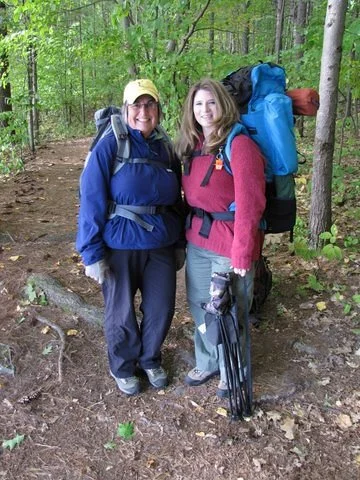
Curious what you really need for a day in the Adirondack backcountry? Wondering how that list changes when you stay overnight? Join us for “What’s in My Pack?” — a hands-on, practical presentation designed specifically for Trailwise Women who want to hike smarter, lighter, and more confidently in the Adirondacks.
Together, we’ll unpack (literally!) the essential gear for both a backcountry day trip and an overnight adventure in the Adirondack Park. From the Ten Essentials to comfort items that make all the difference, we’ll talk through what to bring, why it matters, and how to choose gear that works for your body, your experience level, and your goals.
Kim Sorensen - Program Manager
Growing up in the Pacific Northwest, Kim developed a profound love for wild, untamed places, an early connection that continues to inspire both her life and her work. She finds joy and renewal on the trail, on the water, and waist-deep in a cold river with a fly rod in hand, and she brings that same energy and enthusiasm to teaching outdoor recreation skills to learners of all ages.
Kim spent eleven years with the Texas Parks and Wildlife Department, serving as Texas Outdoor Family Program Coordinator, Diversity Engagement Coordinator, and Boater Education Manager. She led family camping trips, built inclusive outdoor initiatives, and taught essential skills across the state, helping thousands of participants discover that the outdoors is a place where they belong.
Kim is deeply committed to fostering confidence, connection, and a lifelong relationship with the natural world, empowering others to step outside, try something new, and feel at home in wild places.
The Plein Air Painting Tradition: At Sagamore & Around the Globe with Wes Sherman
Admission:
Event: $10.00 | Members & Children: Free
Event & Dinner*: $41.95
*Extend your time with us and enjoy a meal in our historic, lakeside Dining Hall. Click below to register for this event and see the option to buy a ticket “with Meal.” Advance registration is required to add a meal as space is limited and subject to availability.
The Sagamore Seminars education series is offered by Sagamore Institute of the Adirondacks, a 501 (c)(3) nonprofit organization chartered by the Board of Regents of the Education Department of the State of New York and sole owner and operator of Great Camp Sagamore.
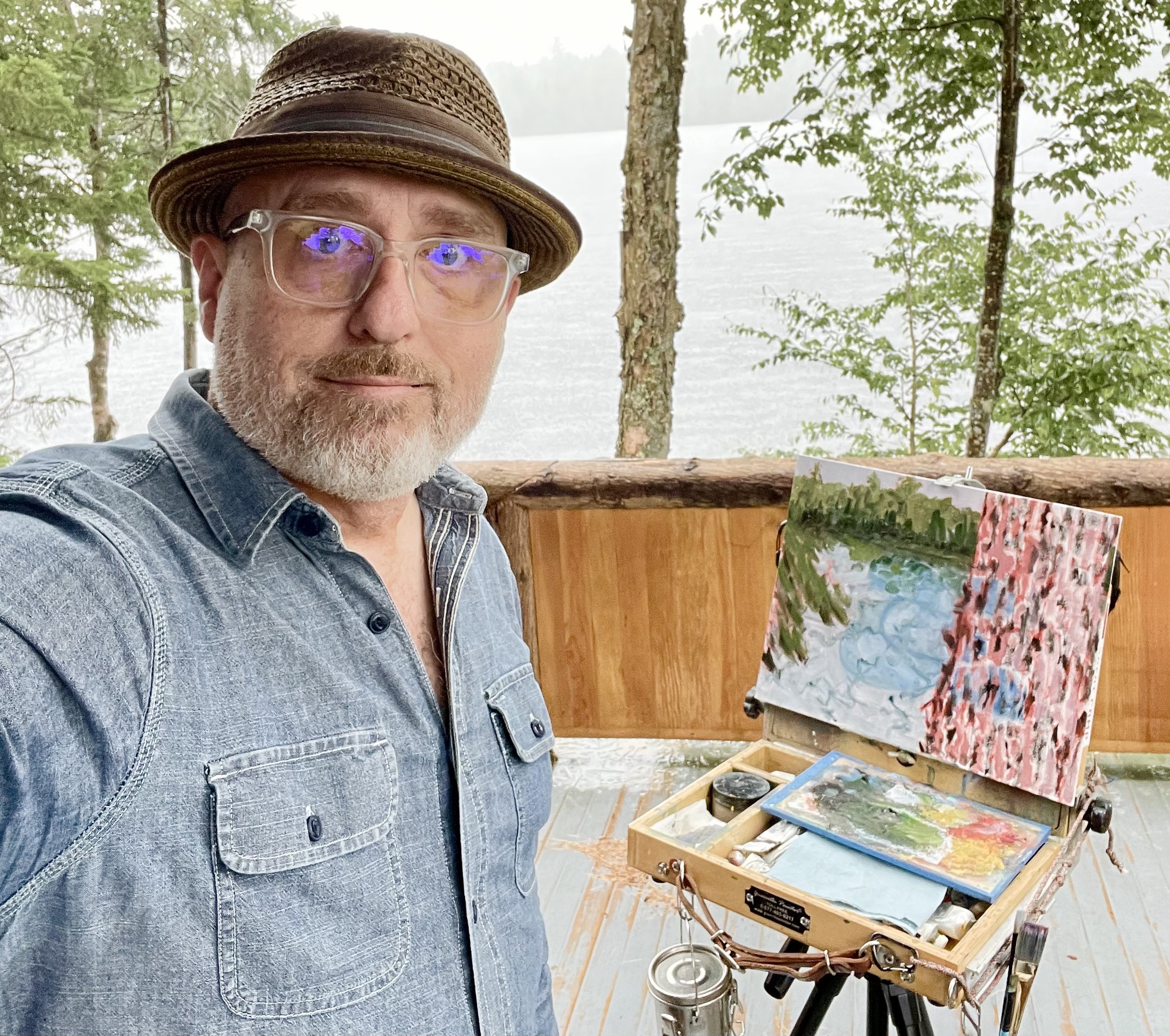
Art Professor and 30-year career artist, Wes Sherman, has long been the beloved lead instructor of Sagamore’s annual Plein Air Painting Seminar. In this presentation, he’ll cover the longstanding of tradition of painting “en plein air” (French for “in the open air”) — at Sagamore, around the Adirondacks, and across the globe.
Wes Sherman - Art Professor
Wes Sherman has been an artist for over 30 years. In that time, he has had 50 solo exhibitions and has been in hundreds of group exhibitions. He was Curator and Chair of Exhibitions at the Center for Contemporary Art in Bedminster, NJ for 12 years, where he had dedicated many volunteer hours to showcasing New Jersey art and artists. He has been a frequent visiting artist at universities and schools and is regularly asked to lead art programs for organizations and clubs. An adjunct professor, Sherman teaches at William Paterson University and Raritan Valley Community College. He received his MFA at Rutgers University, where he studied with his mentor Tom Nozkowski.
Born From Nature, and Built at Sagamore: The Adirondack Artistry of George Wilson
Admission:
Event: $10.00 | Members & Children: Free
Exhibit, Event, & Dinner*: $41.95
*Extend your time with us and enjoy a viewing of the limited-time George Wilson Rustic Furniture Exhibit between 5:00pm-6:00pm, followed by a meal in our historic, lakeside Dining Hall. Click below to register for this event and see the option to buy a ticket “with Meal.” Advance registration is required to add a meal as space is limited and subject to availability.
The Great Camps had great furniture. It came from nature, was built by necessity, and remains exceptional to this day.
Between the 1880s and the 1920s, “Great Camps” like Sagamore transformed the Adirondack wilderness. Unsurpassed in their acreage and ambition, these massive complexes attracted Vanderbilts, Carnegies, Morgans, Rockefellers, Whitneys, Webbs and hosts of other, only-slightly-less-wealthy Gilded Age millionaires and their descendants.
Fleeing congested cities of steel, smoke, and sickness, each summer they sought refuge in these mountains from the ill-effects of the industrial society that had made their fortunes. These bark-clad buildings provided the perfect retreat: rustic on the outside and surrounded by rugged wilderness, yet surprisingly comfortable, ordered and refined on the inside. “Roughing it,” in practice, was seldom that.
But how to refine the interiors? What items might make these sitting-rooms, studies, dining halls, hunting lodges, and bedrooms mirror their exteriors in simplistic, natural style, but still match the complexity, rarity and luxury their owners expected?
The answer to those questions came from men like George Wilson. During the 1900s and 1910s, Wilson worked at Sagamore as a gardener, nursing the crops of vegetables and flowers through the harsh extremes of the Adirondack seasons. But off the clock, he worked on his art—ornately ordered twig-work and tree root tables, bookcases and writing desks that were highly sought in his day and have become practically priceless in our present.
Due the generous loan of a private collector and in celebration of the 50th anniversary of the Sagamore Institute of the Adirondacks, almost a dozen will spend the summer on display at the site that created them, more than a hundred years ago--Great Camp Sagamore.
Join Sagamore's Staff for an exclusive viewing of the pieces, and conversation that explores the context, craftsmanship, manufacture, and meaning of these exceptional artifacts that were born from nature, and built at Sagamore.
Connor Williams - Sagamore Historian
Connor Williams is a 19th Century Historian, trained at Middlebury College (B.A), Dartmouth College (M.A.), and Yale University (Ph.D, soon forthcoming).
A native New Yorker and aspiring maritime mountaineer, Connor currently lives with his family along Lake Champlain in the Adirondack Park. He serves as the Historian for Great Camp Sagamore, where he directs all history programming for several thousand visitors each summer. Most broadly, and via a variety of formats, Connor uses this role to conceive and execute innovative ways to teach environmental history, Gilded Age history, and the history of class, capitalism and inequality to diverse public history audiences.
His quest to summit the 46 ADK High Peaks ...continues.
All Event Sessions
W.W. Durant & How the Great Camps Arose
Photo of Chalet at Camp Huntington (formerly Pine Knot) on Raquette Lake
Admission:
Event: $10.00 | Members & Children: Free
Exhibit, Event, & Dinner*: $41.95
*Extend your time with us and enjoy a viewing of the limited-time George Wilson Rustic Furniture Exhibit between 5:00pm-6:00pm, followed by a meal in our historic, lakeside Dining Hall. Click below to register for this event and see the option to buy a ticket “with Meal.” Advance registration is required to add a meal as space is limited and subject to availability.
In 1850, the Adirondack region was a blank spot on the map, largely unorganized and uncharted. But, by 1900, the Adirondacks hosted elaborate summer estates for the wealthiest families in America: Vanderbilts, Rockefellers, Carnegies, Whitneys and Morgans. While certainly not as lavish as their Newport cottages, Adirondack “Great Camps” such as Great Camp Sagamore still had elegant meals, fully stocked bars and dozens of staff to keep them running. The Adirondacks were a destination for escaping the city and recharging in nature, despite the dusty two-day journey. What was the genesis and what circumstances served as catalyst for this phenomenon?
This presentation by Sagamore’s historian, Dr. Connor Williams, will address these questions, and explore how environmentalism, opulence, industry, inequality, architecture and nature all intersected to produce the Adirondack Park (and the Adirondack vacations) we still connect to today.
Connor Williams - Sagamore Historian
Connor Williams, Great Camp Sagamore’s Historian, has formally trained at institutions throughout the Northeast, including a B.A. in History from Middlebury College, an M.A. in Globalization Studies from Dartmouth College, and a soon-forthcoming Ph.D in History and African American Studies from Yale University. As a public historian, he is pleased to have had many years of teaching and public history experience, including service to the United States Congress.
And as fate would have it (and fittingly appropriate for the Durant's Great Camps program), Connor is also 1/16th Durant; this makes him first cousins, five times removed, with Adirondack Great Camp founder and leading architect William West Durant. On a broad scale and across the board, Connor loves sharing the ever-evolving histories of the Adirondack Great Camps to an ever-expanding group of visitors, members, patrons, and friends.
All Event Sessions
W.W. Durant & How the Great Camps Arose
Photo of Chalet at Camp Huntington (formerly Pine Knot) on Raquette Lake
Admission:
Event: $10.00 | Members & Children: Free
Exhibit, Event, & Dinner*: $41.95
*Extend your time with us and enjoy a viewing of the limited-time George Wilson Rustic Furniture Exhibit between 5:00pm-6:00pm, followed by a meal in our historic, lakeside Dining Hall. Click below to register for this event and see the option to buy a ticket “with Meal.” Advance registration is required to add a meal as space is limited and subject to availability.
In 1850, the Adirondack region was a blank spot on the map, largely unorganized and uncharted. But, by 1900, the Adirondacks hosted elaborate summer estates for the wealthiest families in America: Vanderbilts, Rockefellers, Carnegies, Whitneys and Morgans. While certainly not as lavish as their Newport cottages, Adirondack “Great Camps” such as Great Camp Sagamore still had elegant meals, fully stocked bars and dozens of staff to keep them running. The Adirondacks were a destination for escaping the city and recharging in nature, despite the dusty two-day journey. What was the genesis and what circumstances served as catalyst for this phenomenon?
This presentation by Sagamore’s historian, Dr. Connor Williams, will address these questions, and explore how environmentalism, opulence, industry, inequality, architecture and nature all intersected to produce the Adirondack Park (and the Adirondack vacations) we still connect to today.
Connor Williams - Sagamore Historian
Connor Williams, Great Camp Sagamore’s Historian, has formally trained at institutions throughout the Northeast, including a B.A. in History from Middlebury College, an M.A. in Globalization Studies from Dartmouth College, and a soon-forthcoming Ph.D in History and African American Studies from Yale University. As a public historian, he is pleased to have had many years of teaching and public history experience, including service to the United States Congress.
And as fate would have it (and fittingly appropriate for the Durant's Great Camps program), Connor is also 1/16th Durant; this makes him first cousins, five times removed, with Adirondack Great Camp founder and leading architect William West Durant. On a broad scale and across the board, Connor loves sharing the ever-evolving histories of the Adirondack Great Camps to an ever-expanding group of visitors, members, patrons, and friends.
All Event Sessions
Born From Nature, and Built at Sagamore: The Adirondack Artistry of George Wilson
Admission:
Event: $10.00 | Members & Children: Free
Exhibit, Event, & Dinner*: $41.95
*Extend your time with us and enjoy a viewing of the limited-time George Wilson Rustic Furniture Exhibit between 5:00pm-6:00pm, followed by a meal in our historic, lakeside Dining Hall. Click below to register for this event and see the option to buy a ticket “with Meal.” Advance registration is required to add a meal as space is limited and subject to availability.
The Great Camps had great furniture. It came from nature, was built by necessity, and remains exceptional to this day.
Between the 1880s and the 1920s, “Great Camps” like Sagamore transformed the Adirondack wilderness. Unsurpassed in their acreage and ambition, these massive complexes attracted Vanderbilts, Carnegies, Morgans, Rockefellers, Whitneys, Webbs and hosts of other, only-slightly-less-wealthy Gilded Age millionaires and their descendants.
Fleeing congested cities of steel, smoke, and sickness, each summer they sought refuge in these mountains from the ill-effects of the industrial society that had made their fortunes. These bark-clad buildings provided the perfect retreat: rustic on the outside and surrounded by rugged wilderness, yet surprisingly comfortable, ordered and refined on the inside. “Roughing it,” in practice, was seldom that.
But how to refine the interiors? What items might make these sitting-rooms, studies, dining halls, hunting lodges, and bedrooms mirror their exteriors in simplistic, natural style, but still match the complexity, rarity and luxury their owners expected?
The answer to those questions came from men like George Wilson. During the 1900s and 1910s, Wilson worked at Sagamore as a gardener, nursing the crops of vegetables and flowers through the harsh extremes of the Adirondack seasons. But off the clock, he worked on his art—ornately ordered twig-work and tree root tables, bookcases and writing desks that were highly sought in his day and have become practically priceless in our present.
Due the generous loan of a private collector and in celebration of the 50th anniversary of the Sagamore Institute of the Adirondacks, almost a dozen will spend the summer on display at the site that created them, more than a hundred years ago--Great Camp Sagamore.
Join Sagamore's Staff for an exclusive viewing of the pieces, and conversation that explores the context, craftsmanship, manufacture, and meaning of these exceptional artifacts that were born from nature, and built at Sagamore.
Connor Williams - Sagamore Historian
Connor Williams is a 19th Century Historian, trained at Middlebury College (B.A), Dartmouth College (M.A.), and Yale University (Ph.D, soon forthcoming).
A native New Yorker and aspiring maritime mountaineer, Connor currently lives with his family along Lake Champlain in the Adirondack Park. He serves as the Historian for Great Camp Sagamore, where he directs all history programming for several thousand visitors each summer. Most broadly, and via a variety of formats, Connor uses this role to conceive and execute innovative ways to teach environmental history, Gilded Age history, and the history of class, capitalism and inequality to diverse public history audiences.
His quest to summit the 46 ADK High Peaks ...continues.
All Event Sessions
The Presidency & Presidential Elections in American History
Admission:
Event: $10.00 | Members & Children: Free
Exhibit, Event, & Dinner*: $41.95
*Extend your time with us and enjoy a viewing of the limited-time George Wilson Rustic Furniture Exhibit between 5:00pm-6:00pm, followed by a meal in our historic, lakeside Dining Hall. Click below to register for this event and see the option to buy a ticket “with Meal.” Advance registration is required to add a meal as space is limited and subject to availability.
The Sagamore Seminars education series is offered by Sagamore Institute of the Adirondacks, a 501 (c)(3) nonprofit organization chartered by the Board of Regents of the Education Department of the State of New York and sole owner and operator of Great Camp Sagamore.
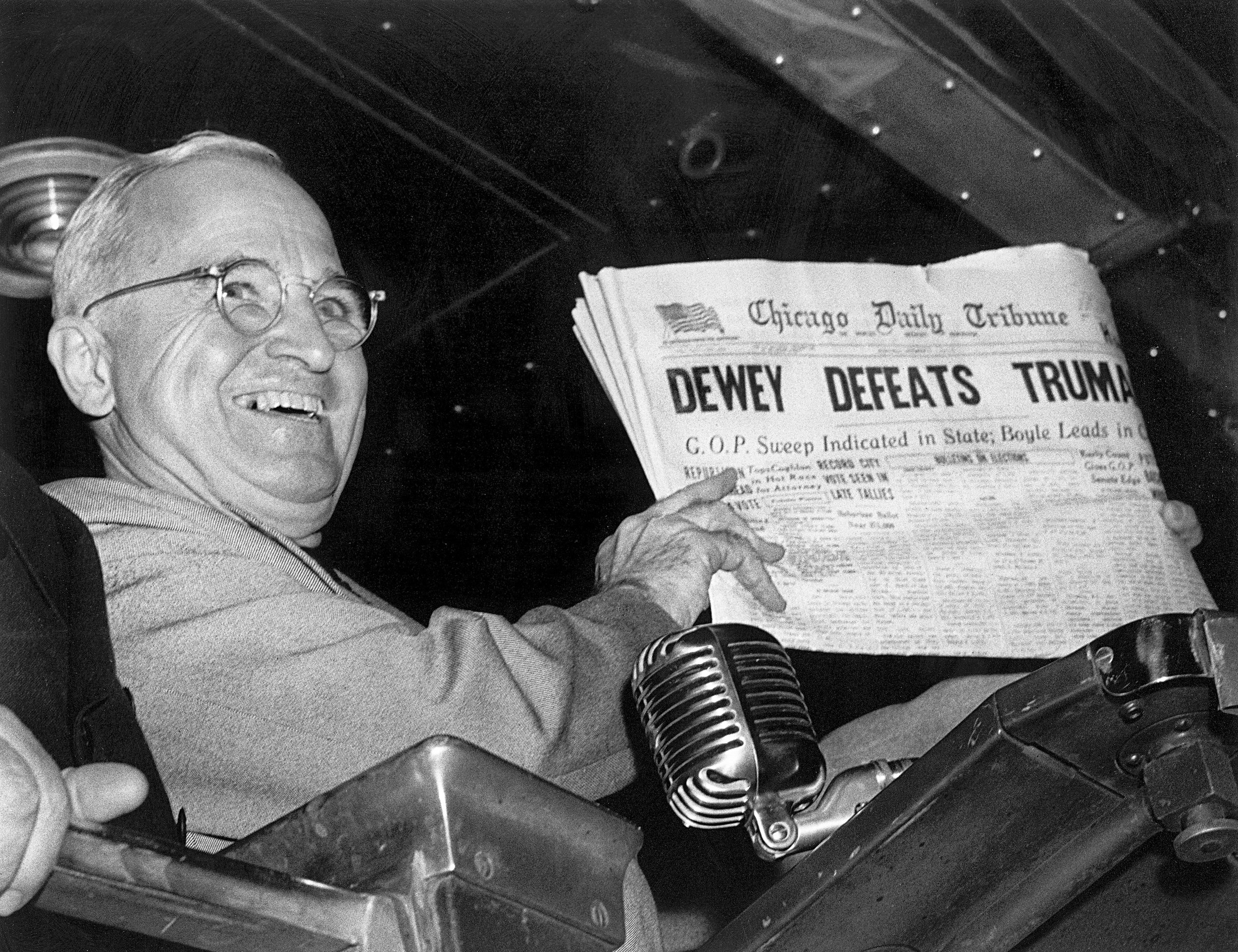
In the aftermath of the Election of 2024, many questions are circulating within our news media and within our minds. Have political coalitions realigned? How did one candidate "win" the election, and how did the other candidate "lose" it? What do Americans really want from their leadership? And at the core, how much of our present moment might fundamentally change America, and how much is politics as usual?
Although history cannot answer these questions for our future, it can give instructive examples from our past. Join Sagamore Historian Connor Williams for a lecture and conversation on what our nation's past elections can teach us about its present and future ones.
This is a non-partisan event: Connor's remarks will be grounded in the past, and presented apolitically--in all aspects, this event is intended to learn from history, rather than politicize it.
Connor Williams - Professional Historian
In addition to being Sagamore’s staff historian, Connor Williams is a formally trained American historian with degrees from Middlebury College, Dartmouth College, and Yale University. His past professional experience involves writing, speaking, teaching, consulting, and working for the United States Congress. In all these pursuits, he has enjoyed being able to keep one foot in the traditions and standards of formal academia, and one foot in the exigencies and politics of the present. The Sagamore Seminars in History Lecture Series provides a terrific chance to share his varied experiences and expertise in an exceptional, historical, and rejuvenating setting.
Fly Fishing: A Moving Meditation with Cari Ray
Admission:
Event: $10.00 | Members & Children: Free
Event & Dinner*: $41.95
*Extend your time with us and enjoy a meal in our historic, lakeside Dining Hall. Click below to register for this event and see the option to buy a ticket “with Meal.” Advance registration is required to add a meal as space is limited and subject to availability.
“Ask any fly fisher why they like to fish, and one of the first things you are likely to hear is that time and troubles all but disappear when you’re on the water. After experiencing this phenomenon for years, I began to lean into aspects of the sport that contributed to its meditative quality and, it turns out, the same practices that lead to relaxation and calm also make you a better fly angler. “
In a world obsessed with shortcuts to performance, fly fishing beckons us to slow down and take the scenic route. In this presentation, Cari will share some of the decisions you can make, on and off the water, to simultaneously enhance your enjoyment and increase your fly angling success.
Enhance your experience by joining us for a delicious dinner in our Historic Dining Hall overlooking Lake Sagamore, followed by the presentation.
Cari Ray - Fly Fishing Guide & FFI-Certified Casting Instructor
Cari Ray, now Sagamore’s Sr. Director of Programs & Operations, is a former full-time guide, host of the Fisher of Zen Podcast, and founder of Zen Fly Fishing, a woman-owned and operated fly fishing school and guide service. She brings years of teaching and guiding in Texas, Colorado, New Mexico, and the Adirondacks. She has always been committed to helping her clients and students become more independent and successful fly anglers. Her true passion, however, is in inviting them to leverage the sport of fly fishing as a sort of “moving meditation.” She believes that some of the most valuable “catches” found on the water have little to do with fish.
All Event Sessions
Impressionism: A Radical Way of Painting with Bill White
Joan’s Beach, oil on canvas, by Bill White
Admission:
Event: $10.00 | Members & Children: Free
Event & Dinner*: $41.95
*Extend your time with us and enjoy a meal in our historic, lakeside Dining Hall. Click below to register for this event and see the option to buy a ticket “with Meal.” Advance registration is required to add a meal as space is limited and subject to availability.
The Sagamore Seminars education series is offered by Sagamore Institute of the Adirondacks, a 501 (c)(3) nonprofit organization chartered by the Board of Regents of the Education Department of the State of New York and sole owner and operator of Great Camp Sagamore.
In this engaging, image-rich presentation, Bill White explores how the artists we now call the Impressionists broke from the rigid traditions of the French Academic system and the authority of the École des Beaux-Arts. At a time when acceptance depended on pleasing the French Salon and adhering to carefully constructed, studio-based methods, these painters chose a different path.
Turning to plein air painting, they focused on capturing the fleeting effects of natural light and atmosphere rather than building compositions through meticulous drawing in dim Paris studios. Influenced by new discoveries in optical color and newly available vivid pigments, they experimented boldly to convey light and movement—reshaping the course of art history in the process.
Bill White - Artist
Bill White has been a painter for over 60 years. He has a BFA & MFA in Painting & he taught Drawing, Painting and Modern Art History for over 40 years. He retired in 2010 as Professor Emeritus from Hollins University, Roanoke, VA. He has received grants from the Ford, Mellon and Cabell Foundations, and he has had residencies at the Vermont Studio Center and the Cite des Arts International in Paris. White’s works are in 18 Museum and Institutional Collections in the USA. His works have been in over 40 solo exhibitions and over one hundred invitational and juried group shows He is a member of the Midwest Paint Group & He is represented by Steven Francis Fine Art gallery in Lynchburg & Roanoke Virginia as well as the Village Gallery in Caledonia, NY.
An Introduction to Adirondack Skies with John Rusho
Admission:
Event: $10.00 | Members & Children: Free
Event & Dinner*: $41.95
*Extend your time with us and enjoy a meal in our historic, lakeside Dining Hall. Click below to register for this event and see the option to buy a ticket “with Meal.” Advance registration is required to add a meal as space is limited and subject to availability.
The Sagamore Seminars education series is offered by Sagamore Institute of the Adirondacks, a 501 (c)(3) nonprofit organization chartered by the Board of Regents of the Education Department of the State of New York and sole owner and operator of Great Camp Sagamore.
Kick off Sagamore’s Stargazing program with an engaging introduction to the wonders above the Adirondacks. In this accessible and wide-ranging lecture, John F. Rusho offers a presentation and guided tour of the night sky as seen from Great Camp Sagamore.
Designed for beginners and curious observers alike, this session explores how to orient yourself under the stars, understand key astronomical terms, and recognize the apparent daily and annual motion of the sky. Participants will learn the basics of celestial coordinates and timekeeping, discover the stories and evolving meanings behind familiar constellations, and trace the ecliptic—the path followed by the Sun, Moon, and planets.
An Earth–Moon demonstration will help illuminate fundamental concepts, and ample time will be reserved for questions. Whether you’re new to stargazing or looking to deepen your understanding, this lecture provides the perfect foundation for exploring Adirondack skies.
John F. Rusho - Program Instructor
Born and raised in Watertown, NY, John attended the colleges of SUNY Canton and Oswego, holding B.S. and M.S. degrees in Technology Education. Most of his primary occupations have been in the fields of mechanical engineering and management, in the Watertown and Central NY areas, retiring as a Project Engineer.
After moving to central NY in 1973, and joining the Syracuse Astronomical Society, he eventually served as Instrumentation Chair, VP, and President. At this point he began designing and building telescopes as well as teaching astronomy at OCC and Oswego State where he contributed to the design and instrumentation of Oswego's new observatory, and performed a ground up restoration of the college's 100 year old classic Brashear telescope.
W.W. Durant & How the Great Camps Arose
Photo of Chalet at Camp Huntington (formerly Pine Knot) on Raquette Lake
Admission:
Event: $10.00 | Members & Children: Free
Exhibit, Event, & Dinner*: $41.95
*Extend your time with us and enjoy a viewing of the limited-time George Wilson Rustic Furniture Exhibit between 5:00pm-6:00pm, followed by a meal in our historic, lakeside Dining Hall. Click below to register for this event and see the option to buy a ticket “with Meal.” Advance registration is required to add a meal as space is limited and subject to availability.
In 1850, the Adirondack region was a blank spot on the map, largely unorganized and uncharted. But, by 1900, the Adirondacks hosted elaborate summer estates for the wealthiest families in America: Vanderbilts, Rockefellers, Carnegies, Whitneys and Morgans. While certainly not as lavish as their Newport cottages, Adirondack “Great Camps” such as Great Camp Sagamore still had elegant meals, fully stocked bars and dozens of staff to keep them running. The Adirondacks were a destination for escaping the city and recharging in nature, despite the dusty two-day journey. What was the genesis and what circumstances served as catalyst for this phenomenon?
This presentation by Sagamore’s historian, Dr. Connor Williams, will address these questions, and explore how environmentalism, opulence, industry, inequality, architecture and nature all intersected to produce the Adirondack Park (and the Adirondack vacations) we still connect to today.
Connor Williams - Sagamore Historian
Connor Williams, Great Camp Sagamore’s Historian, has formally trained at institutions throughout the Northeast, including a B.A. in History from Middlebury College, an M.A. in Globalization Studies from Dartmouth College, and a soon-forthcoming Ph.D in History and African American Studies from Yale University. As a public historian, he is pleased to have had many years of teaching and public history experience, including service to the United States Congress.
And as fate would have it (and fittingly appropriate for the Durant's Great Camps program), Connor is also 1/16th Durant; this makes him first cousins, five times removed, with Adirondack Great Camp founder and leading architect William West Durant. On a broad scale and across the board, Connor loves sharing the ever-evolving histories of the Adirondack Great Camps to an ever-expanding group of visitors, members, patrons, and friends.
All Event Sessions
The Gift of Darkness with Astronomer Aileen O’Donoghue
Admission:
Event: $10.00 | Members & Children: Free
Event & Dinner*: $41.95
*Extend your time with us and enjoy a meal in our historic, lakeside Dining Hall. Click below to register for this event and see the option to buy a ticket “with Meal.” Advance registration is required to add a meal as space is limited and subject to availability.
The Sagamore Seminars education series is offered by Sagamore Institute of the Adirondacks, a 501 (c)(3) nonprofit organization chartered by the Board of Regents of the Education Department of the State of New York and sole owner and operator of Great Camp Sagamore.
Astronomer Aileen O'Donoghue invites us to reconsider what darkness truly is—and why it matters. Tracing its origins in cosmic history, she explores the idea that darkness is not simply the absence of light, but a presence with its own meaning and power. From the formation of the universe to the rhythms that govern life on Earth, this thought-provoking program examines how we experience darkness and why both humans and the natural world depend on cycles of light and dark. Drawing connections between astronomy and monastic traditions, O’Donoghue reflects on how seekers of scientific discovery and spiritual insight alike enter darkness in pursuit of understanding—revealing that sometimes it is the light itself that hides what only darkness can illuminate. Join us for the presentation and stargazing!
Aileen O’Donoghue - Astronomer
Aileen A. O’Donoghue is the Henry Priest Professor of Physics at St. Lawrence University. She received an Associate of Arts degree at Colorado Mountain College that propelled her to earning her B.S. at Fort Lewis College and her M.S. and Ph.D. in Physics at the New Mexico Institute of Mining and Technology. Her research is primarily in radio astronomy and she has conducted observations with the Very Large Array, Arecibo and Green Bank radio telescopes. She has also observed dwarf galaxies in the visible band at the Vatican Advanced Technology Telescope and the optical spectra of stars using the 90” Bok telescope at Kitt Peak and the 1.5 m telescope at Cerro Tololo, Chile. She is currently a member of the ALFALFA undergraduate team studying galaxies in the Pisces-Perseus Superlcuster using radio, optical, and IR observations. Aileen is also a NASA Solar System Ambassador and a board member of the Adirondack Sky Center and Observatory in Tupper Lake, NY.